WISE Strengthens Grassroots Women’s Voices through Mobile Storytelling Training
In commemoration of World Environment Day 2026, the Women’s Media Initiative for Sustainable Environment (WISE) organized a mobile storytelling training for journalists and grassroots women environmental activists from Hoima and Buliisa districts.
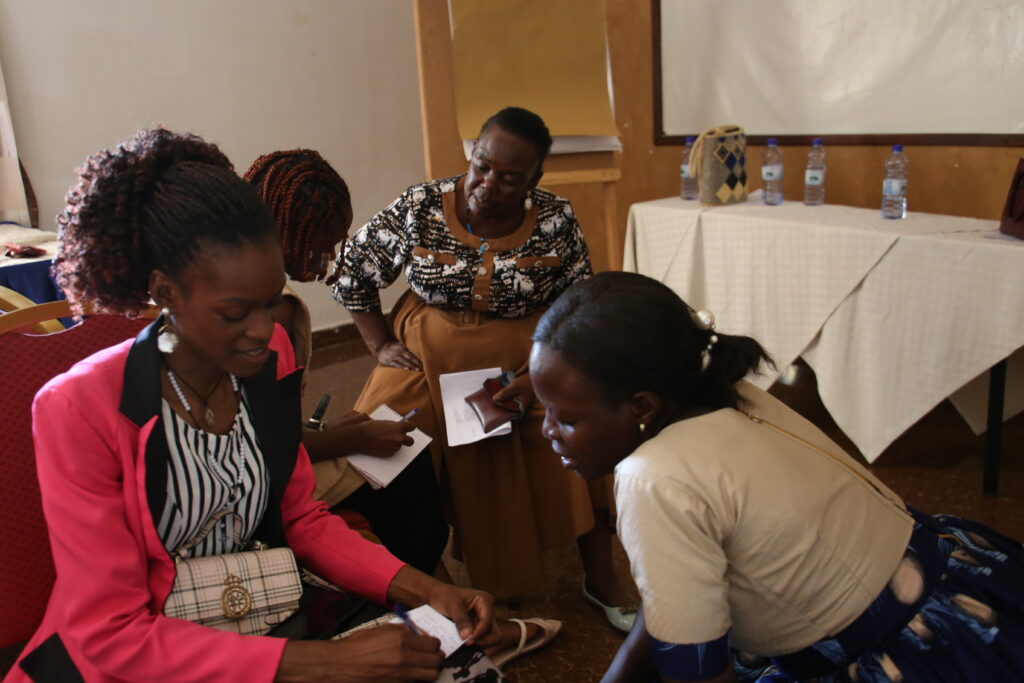
The training, held on 5th June 2026 at Glory Summit Hotel in Hoima, brought together 15 participants, including journalists and grassroots women environmental activists. It was designed to equip participants with practical skills to document and tell environmental stories using mobile phones.
The training also created space for participants to identify barriers that limit women’s visibility in the media and jointly explore practical ways of ensuring that women’s voices are better represented in environmental reporting and decision-making. It further aimed to build stronger relationships between journalists and grassroots women activists so that women in affected communities can become trusted story sources, community reporters, and active voices in environmental justice.
Speaking during the training, WISE Team Leader, Precious Naturinda, said women and girls across Uganda continue to be affected by extractive industries, large-scale land investments such as sugarcane growing, and the increasing impacts of climate change. She noted that while women are often among the most affected, their knowledge, experiences, and solutions remain underrepresented in media and policy spaces.
“Across Uganda, extractive industries, large-scale land investments, and climate change are deepening the marginalization of women and girls. Yet, their knowledge, experiences, and solutions are critical to sustainable environmental governance,” Naturinda said.
She explained that in the Albertine region, where oil and gas activities are expanding, many communities continue to experience social, economic, and environmental challenges. These include climate change impacts, land insecurity, environmental degradation, loss of livelihoods, and displacement. Women are especially affected because these pressures increase their vulnerability while further excluding them from decision-making spaces.
Naturinda added that long-standing cultural norms have also silenced women, weakened their confidence, and limited their participation in community policies and decisions. As a result, women’s lived experiences and solutions are often missing from media coverage and public debate.
She said the training was therefore important because it gave grassroots women practical tools to document community realities using mobile phones, while also connecting them with journalists who can help amplify their voices.
“This training is about building the confidence and capacity of grassroots women to tell their own stories. When women can document what is happening in their communities, they are better positioned to speak, influence decisions, and demand accountability,” she said.
During the training, participants were introduced to practical mobile storytelling skills, including how to identify community story ideas, record interviews, take meaningful photos and short videos, document environmental concerns, and share information with journalists in a responsible and ethical way.
For many of the grassroots women activists, the training created an opportunity to reflect on why their voices are often absent from media stories, even when they are directly affected by environmental degradation, land-use changes, and livelihood disruptions.
Women identified fear of speaking up, cultural norms and values, lack of confidence, the undermining of women’s views, limited access to media platforms, and exclusion of women’s opinions as some of the key barriers affecting their visibility in the media.
Journalists also acknowledged that women remain underrepresented in environmental reporting due to limited resources, difficulty in accessing reliable story sources, and the lack of confidence among some women to speak publicly about issues affecting their communities.
While facilitating the training, Imeldah Kabasoro, a forester working with Nyabyeya Forest in Masindi, said empowering women to speak about environmental degradation is critical because women are directly affected by the consequences of environmental destruction.
She said illegal activities that degrade the environment often affect household livelihoods, access to natural resources, food security, and community well-being, making it important for women to have the confidence and platforms to speak out.
“There is a need to empower women to talk about illegal activities that degrade the environment because they are among those most affected by the adverse effects of environmental degradation,” Kabasoro said.
The training ended with a joint commitment from journalists and grassroots women activists to build a working network that can support stronger women-led environmental storytelling in Hoima, Buliisa, and the wider Albertine region.
Participants agreed that stronger collaboration between women activists and journalists would help bring more community-based environmental stories into the media, especially stories that highlight women’s experiences, local solutions, and demands for accountability.
Through this initiative, WISE is strengthening grassroots women not only as beneficiaries of environmental programming, but also as storytellers, sources of knowledge, and advocates for change in their own communities.
Moving forward, WISE pledged to continue building the capacity of grassroots women and girls to tell their stories, strengthen their collective voice, and drive change through media, advocacy, and movement building.
ENDS